



Found 0 record that meets the criteria
More








Are you looking for a product?
Found 0 record that meets the criteria
Quality Supervision Process Diagram
Raw material additives
Raw material additives
Strictly monitor the quality of all raw materials and additives to meet the production requirements of PAM for high quality and stability. Each type of raw material and additive requires both factory testing and our company's testing to be qualified before they can be put into production, in order to ensure the stability of the production process
01
STEP OPTIONS
Mixed ingredients
Mixed ingredients
Each model of Shouxin PAM has a professional R&D team that has created a unique formula. Under strict supervision by on-site specialists, each material is put into production in proportion to the R&D formula. In this process, strict adherence to the national second level desalinated water standards and high-quality standards for each ingredient is required to meet the high stability requirements of PAM production
02
STEP OPTIONS
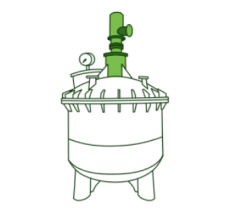
Polymerization
Polymerization
Adjust the pH value and enter the polymerization kettle. After the monomer mixture enters the reactor, high-purity nitrogen (99.999%) is introduced to drive oxygen. During the oxygen drive process, an initiator is added, and nitrogen driven oxygen is stopped at the beginning of polymerization. After the polymerization reaction, hydrolysis is carried out at a constant temperature for at least 8 hours, and the temperature of the colloid is controlled between 80-90 ° C. Strictly monitor and strive for excellence in every process of production to ensure the production of high-quality and stable PAM
03
STEP OPTIONS

Chop and pelletize
Chop and pelletize
In this process, the on-site specialist strictly supervises and controls the compressed air pressure to 0.4 MPa. During the cutting process, in order to prevent the colloid from re bonding, grinding oil is continuously added, and the particle size of granulation is strictly controlled between 3-6mm
04
STEP OPTIONS
Dry
Dry
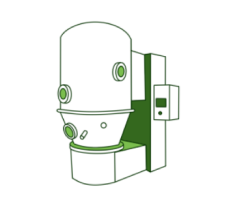
During the drying process of the material, the on-site specialist strictly monitors two stages: 1. constant speed drying stage, and 2. reduced speed drying stage. The moisture inside the PAM is gradually evaporated through low temperature, and the process is considered complete only after reaching the required solid content;
The temperature control of fluidized bed is divided into two parts: 1. The heater temperature is controlled between 110 ° C-150 ° C; 2. The temperature of the heater itself is controlled between 70 ° C-100 ° C. The temperature of the point material before the fluidized bed is controlled between 30 ° C-50 ° C, while the temperature of the point material after the fluidized bed is controlled between 40 ° C-60 ° C
05
STEP OPTIONS
Crushing and screening
Crushing and screening
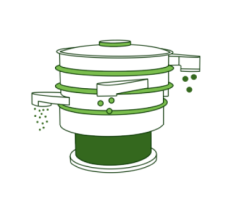
Before starting the homework, the on-site specialist will conduct a high standard inspection of the equipment used, such as the grinding machine and screening machine, to ensure their proper functioning. Products that meet the particle size requirements enter the product hopper, while those that do not meet the particle size requirements enter the fine powder hopper. Strictly monitor the particle size of PAM and control it within the range of 0.15-1.00mm to ensure its solubility and effectiveness in use
06
STEP OPTIONS
Packaging system
Packaging system
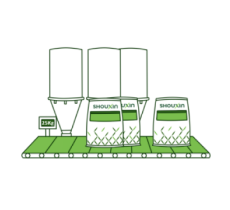
In this process, a belt mixer and a screw system are used to evenly mix the product before sending it into a safety sieve; Effectively remove possible agglomerates in the finished product. The product packaging requires the use of an automatic weighing system to accurately package the finished product into a weight of 25Kg per package. Strictly select packaging bags, seal and tie them with double-layer plastic film to prevent polyacrylamide from absorbing moisture and clumping during storage, monitor the quality and stability of each package of products 100%, and ensure an absolutely safe storage environment
07
STEP OPTIONS

Finished product inspection
Finished product inspection
The laboratory has CNAS testing qualification certificate: the testing personnel have the national professional qualification certificate for laboratory technicians, and the company has a specialized, information-based, intelligent, and well-equipped testing laboratory. Strictly test every sample according to national standards, and strictly inspect every laboratory sample to ensure high and stable product quality

08
STEP OPTIONS
Qualified finished products entering the warehouse
Qualified finished products entering the warehouse
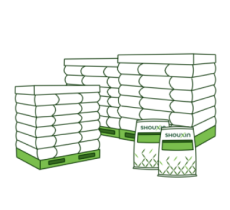
In this process, we need to monitor the products and store them in different zones and categories according to their models. Each model of product should be clearly labeled to ensure accurate and error free transportation to customers. The temperature of the warehouse storing polyacrylamide is controlled at around 28 ° C and the humidity is controlled at around 35% RH; Ensure a dry, cool, and well ventilated storage environment to prevent material melting and clumping
09
STEP OPTIONS


