
Found 0 record that meets the criteria
More







Are you looking for a product?
Found 0 record that meets the criteria
Release time:2026-05-17
source:Shouxin
share:
Shouxin R&D Center
In municipal sludge treatment, the dosage control of polyacrylamide (PAM) has long been a challenging issue: insufficient dosing leads to loose flocs, while overdosing causes "overflocculation", which not only increases chemical costs but also raises the cake moisture content and deteriorates filterability. Traditionally, overflocculation has been regarded merely as a macroscopic phenomenon, lacking a systematic molecularlevel explanation – a gap that has directly constrained the precision design of PAM products and the development of onsite intelligent dosing systems.
The "Three Faces" of PAM OverDosing: Evolutionary Code from Suppressed Aggregation to HydrogenBond Trapping of Protein Conformation
Shouxin's R&D team has long focused on the interfacial interaction between PAM and sludge extracellular polymeric substances (EPS), with particular attention to extracellular proteins (PN) – the most abundant EPS component and the most influential factor in flocculation and dewatering. Through systematic spectroscopic analyses (including UVVis, threedimensional fluorescence, Fouriertransform infrared spectroscopy, and Xray photoelectron spectroscopy), combined with multivariate statistical tools such as principal component analysis and redundancy analysis, we have conducted an indepth tracking of protein molecular conformation under excessive PAM dosing. Key findings are as follows:
Stagewise evolution pattern:PAM overflocculation is not a simple linear deterioration, but exhibits a threestage feature of "suppressed aggregation → promoted aggregation → reinforced hydrogenbond network". In the slightexcess stage, both small and largemolecule fractions of proteins increase, with enhanced hydrophilicity. As the dose further increases, protein hydrophobicity rebounds, and ultimately, in the severeexcess stage, a dense C=O···N–H hydrogenbond network forms – the flocs become compact but their waterholding capacity paradoxically rises.
A New Perspective from Water Research: The "NonMonotonic" Evolution of Extracellular Proteins in PAM OverFlocculation – A Molecular Reversal from Aggregation Suppression to HydrogenBond WaterLocking
Excitingly, we recently became aware of a study published in 2025 in the top international water treatment journal Water Research (Liu et al., titled "Molecularscale mechanism of extracellular protein overflocculation for sewage sludge dewatering by polyacrylamide"). That study, employing UVVis, 3D fluorescence, FTIR, XPS, and multivariate analyses (PCA and RDA), reached the following core conclusions:
Nonmonotonic change in PN molecular weight.PAM overflocculation is not a simple linear process. When PAM increased from the optimal dose (11%) to 13%, the spectral indicators representing smallmolecule (S~275295~) and largemolecule (S~350400~) fractions in LBEPS (loosely bound EPS) actually increased, indicating that slight overdosing suppressed PN aggregation and sedimentation. When further increased to 17%, both fractions declined, and PN aggregation intensified significantly.
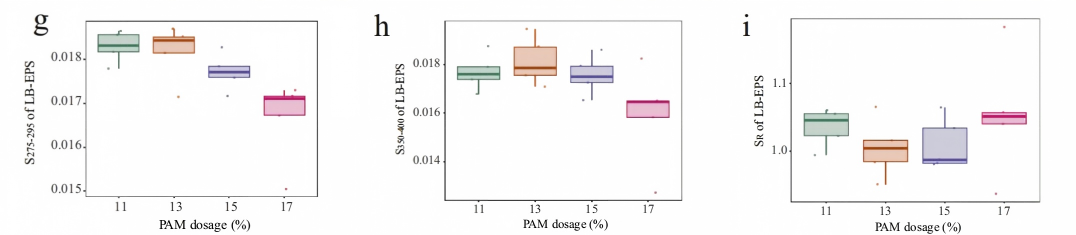 Figure 1.Variation of LB-EPS molecular-weight indicators with PAM dosage
The decisive role of protein functional groups.The study confirmed that changes in the proportions of C=O, N–H, and O–H groups are the intrinsic drivers of PN–PN interactions and the surface hydrophilicity/hydrophobicity of PN. In the slightexcess stage, increased O–H groups enhanced PN hydrophilicity, hindering water release; in the severeexcess stage, dense hydrogen bonds between C=O and N–H formed, driving PN hydrophobicity to its peak.
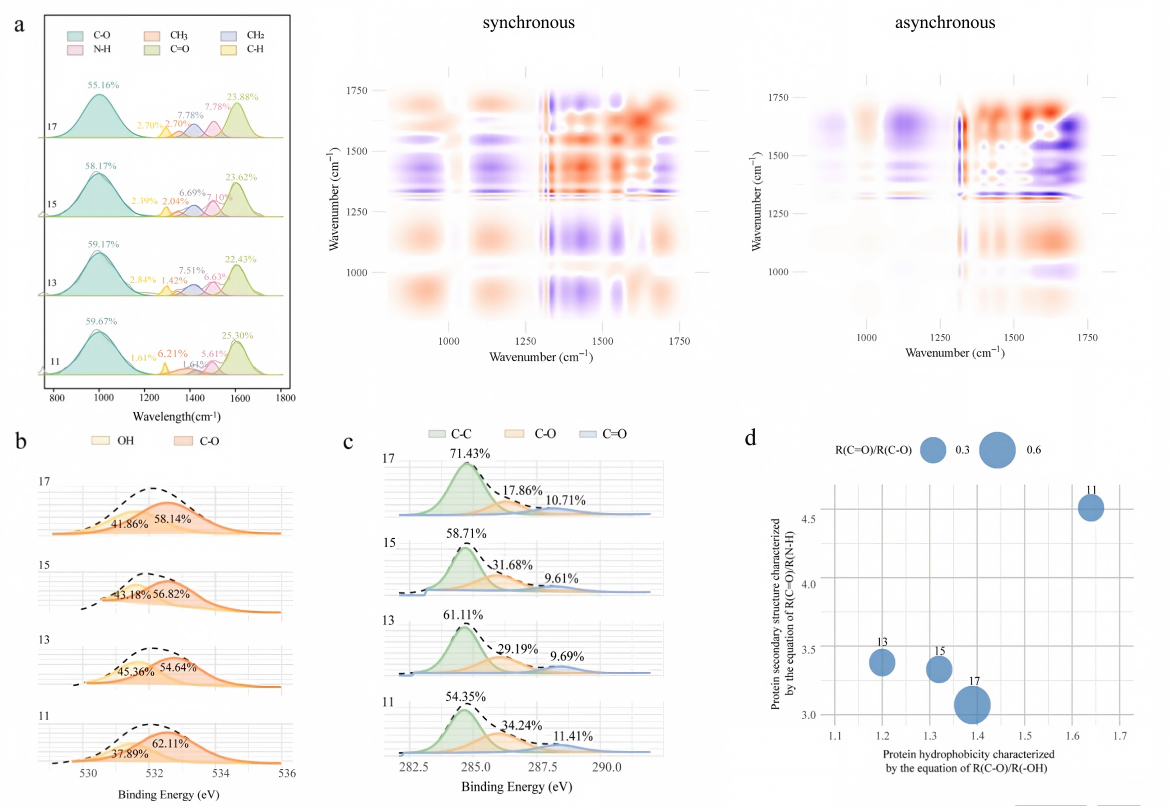 Figure 2.Changes in functional group characteristics and protein parameters of dewatered cake
A complete trajectory of PN hydrophobicity: first down, then up.During overflocculation, PN hydrophobicity follows a full path of "decrease → rebound → exceed the initial level", providing a key molecularscale criterion for assessing the degree of PAM overflocculation.
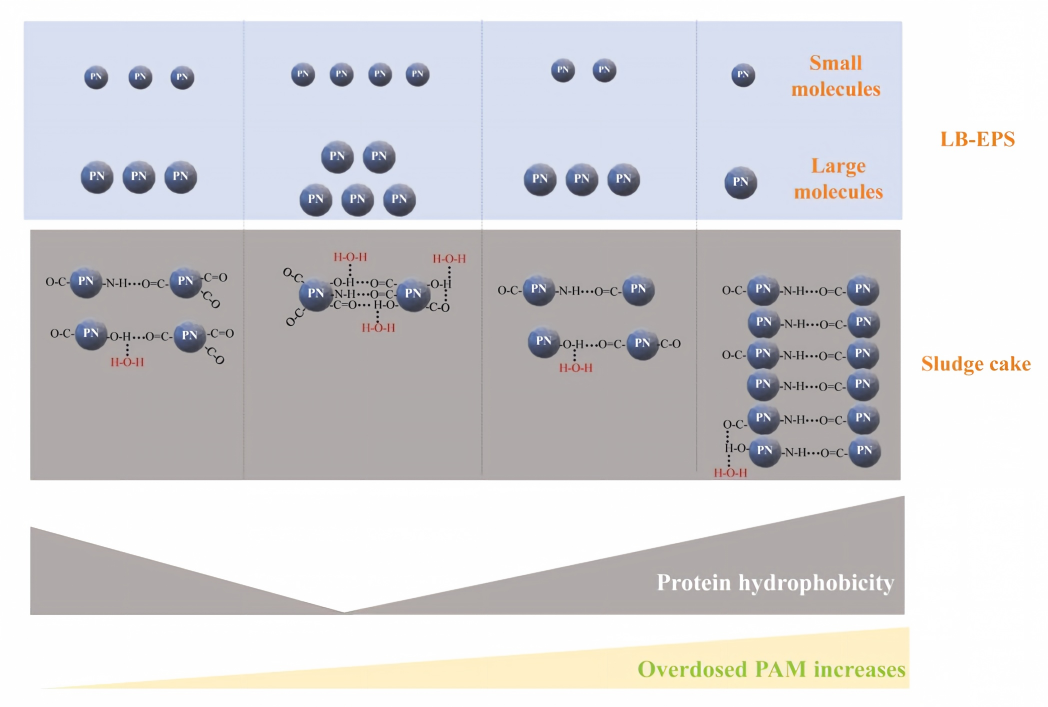 Figure 3. Schematic diagram of the transformation mechanism of extracellular proteins during PAM over-flocculation
Mechanistic Consensus with Water Research, and Our Pioneering Translation: Intelligent Dosing Models and TargetModified PAM Usher in a New Paradigm for Sludge Dewatering
Building on these mechanistic breakthroughs, our company has taken the lead in translating the research outcomes into practical applied technologies:
Intelligent dosing guidance model:Based on the quantitative relationship between spectral indicators and PAM dosage, we have developed a simple dosagejudgment model that assists onsite operators in quickly identifying whether the system has entered the overflocculation zone, thereby avoiding wasteful chemical addition.
Functionalitytargeted modified PAM:In response to the response characteristics of protein functional groups, we have optimised the cationic degree, molecular weight, and functionalgroup distribution of PAM, launching a new generation of flocculant with a broad effective dosage window, which significantly improves adaptability to different sludge types.
This alignment between our research results and the findings published in Water Research fully demonstrates that Shouxin boasts a global vision and robust scientific capacity in basic PAM research. In the future, we will continue to deepen our work at the interface of sludge surface chemistry and polymer design, using molecularlevel mechanisms to guide product iteration, and provide the industry with more scientific and costeffective total solutions for sludge dewatering.
Source:Water Research 287 (2025) 124550
Original Title:Molecular-scale mechanism of extracellular protein over-flocculation for sewage sludge dewatering by polyacrylamide
Original Author:Minmin Liu, Jiesi Zhang, Yawei Zhao, Wei Wang, Huihui Zhang, Wenzheng Yu


